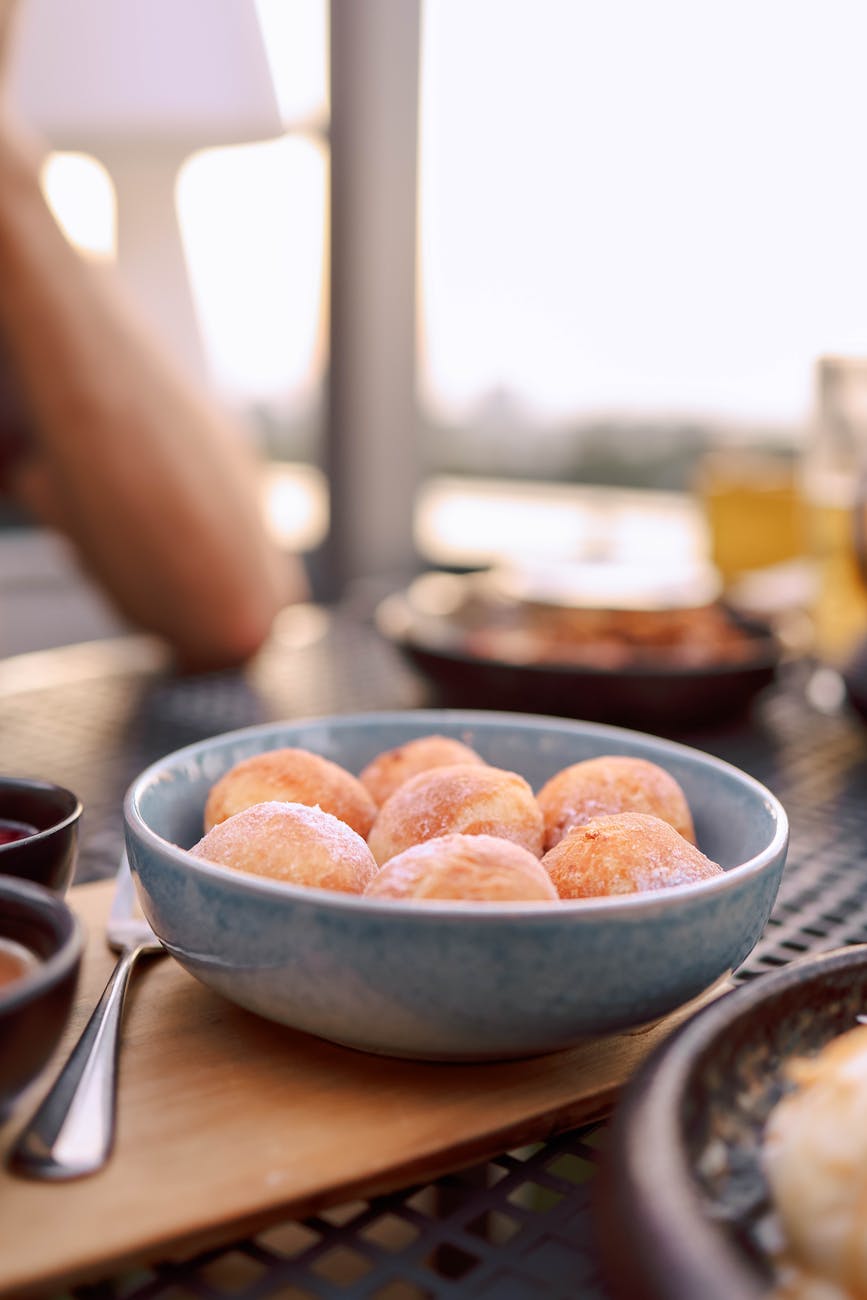
Even people who know me well think twice when I tell them New Orleans is one of my favorite cities. Most look at me with a confusion that seems to be trying to envision me with swaths of Mardi Gras beads around my neck, dancing in a conga line down Bourbon Street. Since not even I can see that ever happening, it only takes a few minutes to explain why a city with so many heritages can be such an ideal place for epicurean and cultural exploration, even, and especially, if rum is not involved.
That was the case one fall evening, when I flew into New Orleans for a conference. Just when I thought I couldn’t like the city any more than I did, this trip revealed the name of their airport to me—Louis Armstrong New Orleans International Airport. Seriously—is there a better name for an airport?
My favorite cabbies are the ones who basically live their lives while driving around town. It’s a treat to listen to their music, study what they place over their rearview mirror and on their dashboards, and listen to whoever is on the other end of the cellphone call they are making as they take me to my destination (hey, if they want privacy, it’s time to consider the priesthood).
That was the case tonight, as the guy on the other end of the phone was doing most of the talking. At first, the cabbie was so quiet, I assumed the conversation was going on in English. But after a couple of stoplights, it was clear he was working off a more musical pattern of speaking, where sentences started at a higher tone, dropped down, then ever-so-gently floated back up at the end. As a result, even though the words sounded like French, I knew enough about French to know it wasn’t French.
It was Cajun, the language spoken by the good people whose roots were in French Canada. When the British tossed them out in the 1700s, many decided to stay in North America, so they came to Louisiana, where these Canadians, thanks to the speaking patterns at the time, came to be known as Cajuns. Combined with the cabbie’s very understated approach to conversation, this was a treat—a soft-spoken native in the land of big brassy tourists.
We got out at my hotel, and as he handed me my bags, I gave him his fare, and miraculously pulled out a “Thank You” in Cajun (yeah, no idea where that came from). He stared at me, rightfully incredulous, and asked me in English if I spoke the language. I laughed and confessed that Thank You was a bit of a miracle, then went on to ask him the question I ask every cabbie.
“I’m going to grab dinner. Where would you eat if you were going to dinner tonight?”
He shut the trunk with great purpose, and led me by the elbow to the front of the cab. “You see that blue light (a couple of blocks away)? Go in, and get the pulled beef sandwich.”
Two words in a language I otherwise knew nothing about led to a bond that got me to a meal I never would have known, in a restaurant where I came to know more about the real world I’d just flown into. It wasn’t the best pulled beef I’d ever had, but the atmosphere of the night, and its lesson, has stayed with me ever since. Two words can make a world of difference.
Dumpling
Gyoza
Mandu
Pierogi
Rangoon
Dambolo
Beignet
The fragments from poor kitchens
Make us all feel most at home.
Like what you see? Subscribe for free!
 Six O'Clock Sky
Leave a comment