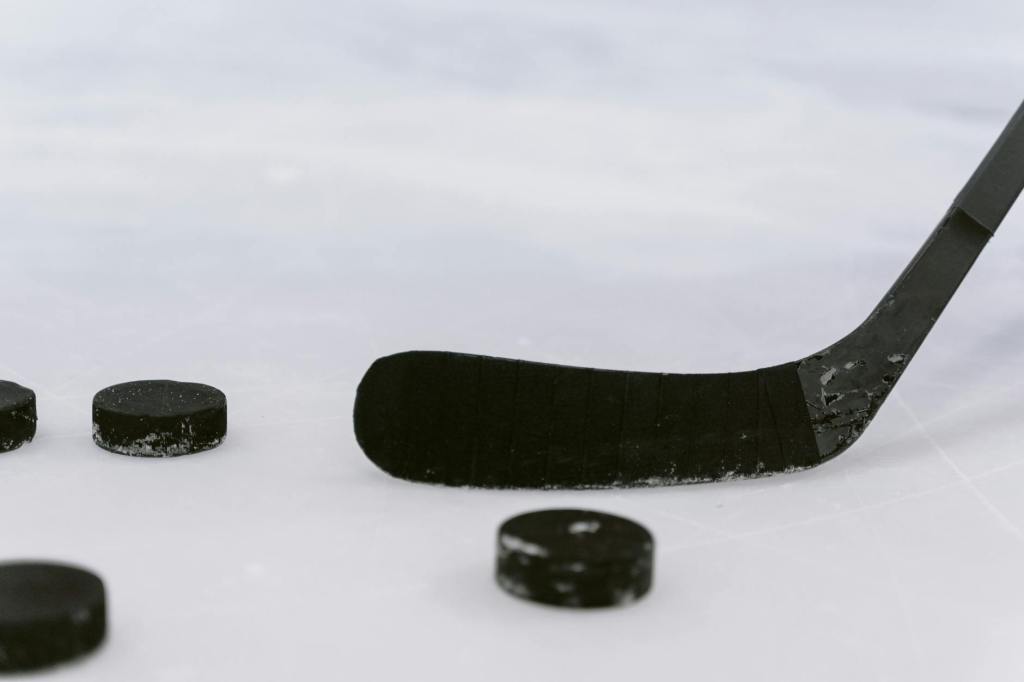
Legendary football coach Bear Bryant couldn’t watch hockey, once calling it something like “a series of random mistakes”. It’s easy to understand why he felt this way, since football is the only game where you can have a play, get up, and talk about the next play while the game clock is running. There’s lots of time there to do all kinds of thinking and planning, and that’s just not hockey.
My first in-person exposure was at Detroit’s Olympia Stadium, a cavernous arena that housed the original Detroit Red Wings. Gordie Howe scored a goal that day, and watching him play the game was like watching Nureyev. If Bear Bryant had ever come by Detroit for a Strohs and a Wings game, he would have had a greater appreciation for it.
I fell away from the game in the mid-70s, when the Philadelphia Flyers decided its city’s reputation for hooliganism deserved a place on the ice. I waited about ten years to return, after rule changes made it much more difficult for a game to become a Zambonied wrestling match. The game was certainly faster, but the rest of its integrity had been maintained, and provides some keen life lessons we all could pay attention to.
You have to think on your feet Bear Bryant may have been right about the lack of advanced planning in hockey, but that’s kind of the point. When things turn on a dime, you have to have the good sense to see how that creates new possibilities, not how it ruined your precious best intentions. Then, in a heartbeat, you have to bring your plan to life, and see what happens—and if that doesn’t work, you have to shake it off and move on.
So—did I just describe a hockey match, or a day at the office?
And in case you don’t think this spontaneity can lead to anything beautiful, both of the winning Olympic goals for the men’s team and the women’s team were the result of “well, lookie here” thinking.
The dignity of being a good winner Long before youth sports programs made it part of their recipe for sportsmanship, the only sport where both teams shake hands at the end of a protracted championship battle was hockey. When the game is on, there are moments when they appear to nearly kill each other, but once the issue is resolved, every member of both teams comes to center ice and shakes hands, with some even stopping to talk to the player who nearly ripped their head off ten minutes ago. If you’re looking for a sport where tradition requires players to understand it’s just a game, this is it.
These folks are family One of my high school students decided to forego college to play Junior hockey, a semi-pro league in Canada where hockey hopefuls hone their game before trying to make it big. The team he played for was in a part of the world he’d never been to, and Juniors don’t make money, so he was taken in by a local couple who had a spare room, where he lived the entire season.
The family tone of hockey was also shown at the Olympics. The Gaudreau brothers were hockey players, killed two years ago in a cycling accident. Since at least Johnny was destined for the Olympics, his teammates took his kids from the stands for the gold medal team photo—and as they approached, the visage of every member of the team changed, lighting up like they themselves were five years old.
Nothing random about that.
Gordie
He learned the game on a pond
Not with a puck
But a tennis ball.
Controlling that sucker
Was your worst nightmare
So you had to
Practice, practice, practice.
He scored more goals than anyone
For the longest time
Without youth leagues
Private coaches
Or travel teams.
It wasn’t about
What was without
But always
What was within.
Like what you see? Subscribe for free!
 Six O'Clock Sky
Leave a comment