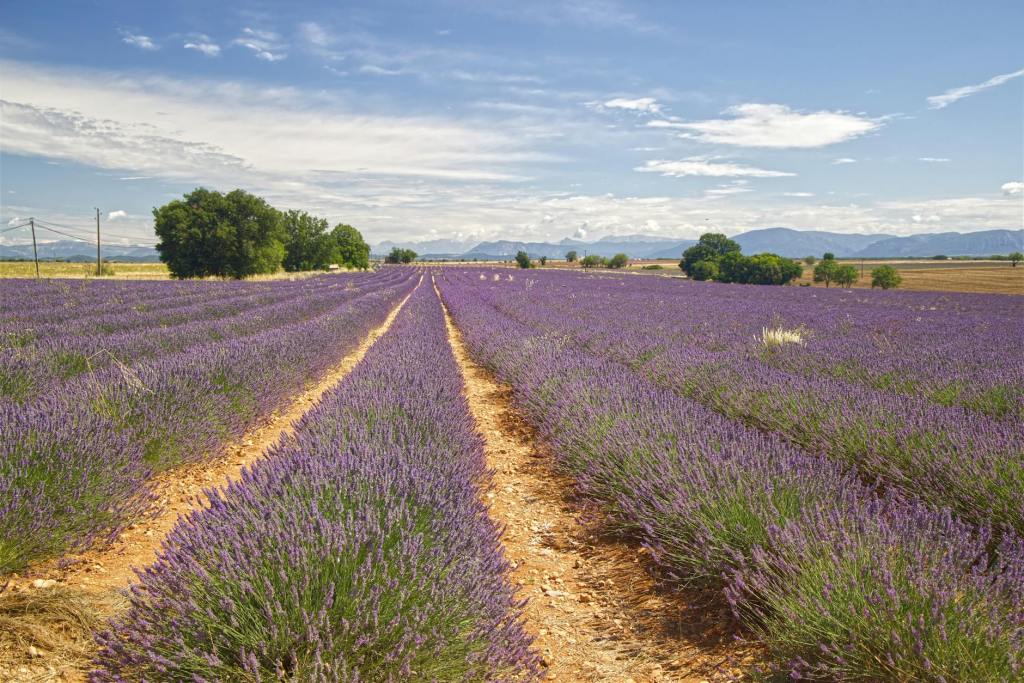
Our version of Planes Trains and Automobiles ended in a small village in Provence. De Gaulle Airport, the aerial receptacle of Europe’s most elegant city, was surprisingly reminiscent of an aging monochromatic bus depot. The Paris train station was far more elegant—but the modern train we took for a two-hour that resembled nothing like The Orient Express. It left us in a modest stop that was a hub for rental cars, where we secured the world’s smallest SUV, one that barely held the luggage of four Americans staying for two weeks.
After that, grace awaited us at every turn. I’m sorry to say I strode into the restaurant of le petit village as if I were liberating Rick’s Café, oddly satisfied the place was empty, except for us. The kids scraped their chairs back, famished from their travels, and I surveyed every nuance of this postcard-perfect bistro.
Even the waiter looked as expected, as he quietly got up from the table where he was smoking with what I assumed were his fellow waiters. His jet-black hair matched his perfectly creased pants, and his white shirt was faintly crisp even though it was four in the afternoon. He walked over as if he hadn’t a care in the world.
“Bonjour” he and I both said at almost the same time, then he quietly and respectfully added, “Our dinner service begins at seven.”
The journey had addled my brain, since I had forgotten a friend told us, in no uncertain terms, that the French finish lunch no later than 2, and then serve no food until at least 6. A French afternoon was for many things, but eating was not one of them. Only Americans do that. Ugly Americans.
He couldn’t have been more thoughtful as I apologized profusely in my very weak French, grateful that the French word for “Sorry” was an easy one to remember (pardon). I vaguely remember getting some lovely fruit and sparkling water at a local store, and we returned to our villa, one the Air B and B pictures didn’t do justice to.
And that was the story of Provence. They had open air markets five days a week in various parts of the region, giving us a great way to get fresh produce and really understand where we were. One market had a seller of seafood so fresh, the petit blue crabs were crawling in the little net bags they occupied. It was there I bought ten sachets in varied Provence patterns for colleagues back home. Seeing I was an American, the merchant knew I wouldn’t haggle over the price, so he casually tossed two more sachets in my bag after I paid for ten.
The women who ran the pâtisseries could not have been more engaging. Once my wife started the conversation in solid French, they crossed over to English when our expertise faded, and made sure we had a perfect breakfast. Our villa neighbors gladly worked in and across two languages to direct us to can’t-miss sites. And when we visited the Camargue—a region known for beaches, flamingos, and cowboys—tour guides easily helped us make sense of a trifecta even they seemed to know Louis Carroll couldn’t piece together.
A native taught us the French we needed before we left, then offered this counsel. “Make an effort to communicate in a way they understand. Once they know you’re trying, they’ll help you.”
Advice that made for a good trip to Provence, and a better one for the rest of my journey in life after that.
Grace
Is it erasing a miss
Begging for harmony
Hoping today
Doesn’t reflect in what happens tomorrow?
Or is it knowing more
Of what’s always been there
And
Still confused why we didn’t see it earlier
We ask to know it now
Not for our peace of mind
But to see our place
In the peace of mind.
Like what you see? Subscribe for free!
 Six O'Clock Sky
Leave a comment