When I tell most people there are two Michigans, they remember their fourth-grade geography lesson showing how Michigan is made up of two big peninsulas, making it the 22nd largest state by land mass.
But that’s not what I mean at all. The Michigan most people know is the one invented by Henry Ford, that takes up a good chunk of the southern part of the Lower Peninsula. Not every community has, or had, an auto plant, but nearly all of them had a plant that produced auto parts, residences that housed people who oversaw the production of cars, or facilities that had something to do with cars. Yes, the economy is a little more diverse now, but if it weren’t for cars, we’d all be sugar beet farmers, if we were here at all.
That’s what the rest of Michigan is about. Get past that southern chunk, and freeways that usher thousands to work in the First Michigan become the fastest way to connect huge swaths of farmland or vacant land—or, even more important, the quickest way to shake a First Michigan workweek off your shoulders by driving to the lakes and forests quietly waiting for us in the rest of Michigan, known as Up North.
Tourism, agriculture, outdoor sports—and, oddly, fudge– rule the day Up North, the destination of five-hour drives from the First Michigan to “cottages” that are more like second homes. In the golden days of the auto industry, families would pack up everything and live Up North, with the breadwinner using their vacation time to create a series of four-day weekends in July and August to drive back and forth from home to, well, home. With the exception of lobster, Cape Cod has nothing on Up North—and since we have smoked whitefish and Petoskey stones, even that difference is pretty minimal.
My dad was a printer, working closely with the Mad Men who promoted the latest dream cruiser. We never had a place Up North, renting a cabin every now and then instead of owning. But Dad celebrated Up North his own way every August, when the humidity of the Great Lakes can be felt in every nook and cranny of even Michigan’s innermost hamlets, and where tomatoes grow like rich, deep apples.
And that’s how Dad ate them. Farmers brought corn, tomatoes, and melon down the vast freeways and sold them off the backs of their trucks to folks like Dad along the byways that connected suburban homes to the interstates. For the better part of that month, Dad would bring a basket home, throw his tie in the kitchen, and head to the back patio with nothing but the tomatoes and a saltshaker—and just like that, Dad was Up North.
Thanks to genetic engineering, tomatoes today aren’t nearly what they were back then. The skins are thicker, and the meat is dryer, all in the name of making them easier to transport, and easier to make money from.
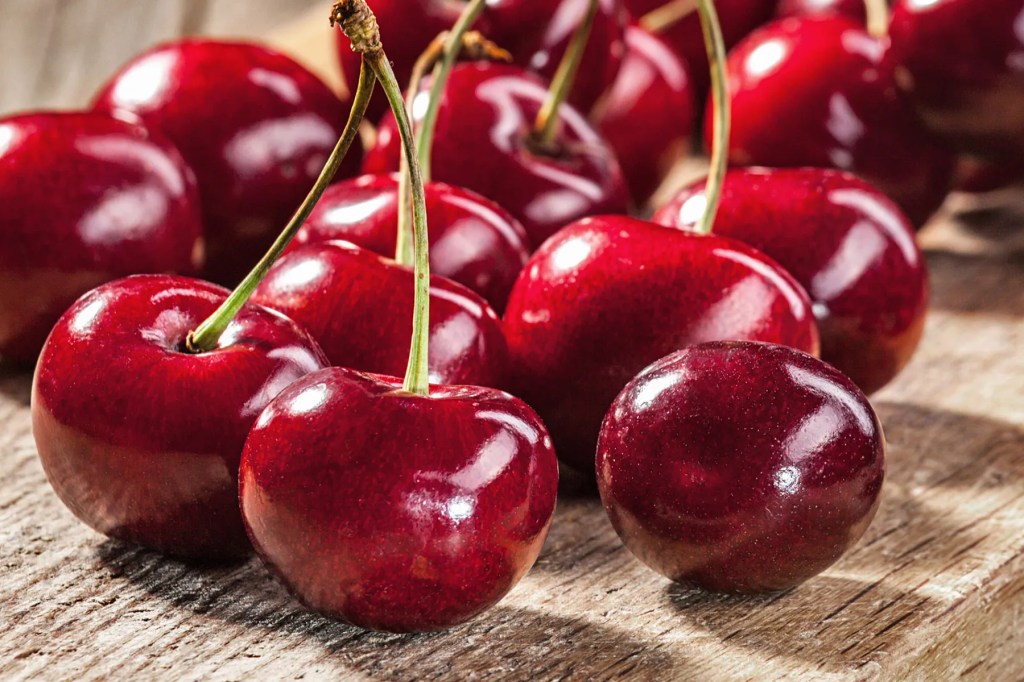
Some small farmers are helping heirloom tomatoes make a comeback, but I’ve developed my own homage to Michigan agriculture. Each June, just as school is getting out, the sweet cherries hit the shelves—and the emphasis is on sweet. I find a quiet place to look at the beautiful gardens my wife nurtures, leave the saltshaker in the kitchen, and fire out the pits with the gentlest, most reassuring thud into a ceramic bowl that quickly turns from cherry holder to pit spittoon, all without driving so much as an hour.
And that, my friends, is summer in the two Michigans.
Vision
The red light on the TV
The green light on the printer
The blue clock numbers on
The stove and the microwave
Replete with a colon
That blinks every two seconds.
The temperature gauge on the fridge
And the reminder if you’re about to get
Cubed
Crushed
Or melted.
Turn those off
And get three neighbors to do the same
And you could see the Aurora Borealis on demand.
The stroganoff might melt
And the reprogramming cycle is an eternity
But what channel connects you with eternity
And which noodle feeds your soul?
Like what you see? Subscribe for free!
 Six O'Clock Sky
Leave a comment